

At Zeetork Automation & Control Private Limited, our Manual Over Ride (MOR) services are built on deep industrial expertise and technical precision. Whether you’re implementing MOR devices for emergency control of actuators or ensuring reliable manual operation in automated systems, our skilled technicians provide end-to-end solutions tailored to your operational needs and quality standards.
We carefully assess system requirements, actuator specifications, and operational scenarios to ensure precise installation, smooth manual operation, and reliable performance of manual over ride devices.
Our team works closely with clients to deliver meticulous installation, rigorous functional testing, and comprehensive quality validation—ensuring each MOR device allows safe and effective manual control when needed, without compromising system safety or efficiency.
Zeetork’s MOR solutions guarantee seamless integration of manual control capabilities into your automated systems and production infrastructure.
Zeetork’s MOR services bridge the gap between automated actuator control and reliable manual operation. Our goal is to implement and commission MOR devices that provide instant, safe manual intervention during maintenance, emergencies, or system override situations. From precise installation to performance validation, we deliver dependable and industry-compliant solutions.

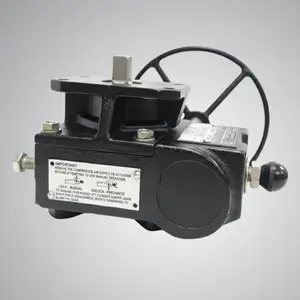


A manual override is a mechanical feature that allows an operator to manually operate a valve or actuator in the event of power or air supply failure. It ensures safe and reliable control during emergencies or maintenance activities.
Manual override is essential for:
It typically involves a handwheel, wrench, or lever mechanism that mechanically engages the actuator’s drive system. When activated, it allows manual rotation or movement of the valve stem to open or close the valve.
Common types include:
Yes. Both pneumatic and electric actuators can be equipped with manual override systems, though their mechanisms differ based on actuator type.
Yes, but with caution. On spring-return actuators, manual operation should be performed against spring tension, or using a mechanical lock to prevent sudden movement.
Not always, but it is highly recommended for safety-critical applications where valve position control is essential during power loss or system failure.
If a manual override fails, the actuator may not respond manually. In such cases: